Statewide months of supply rose from 2.2 to 2.6 in July — the first genuine loosening this cycle. But a statewide average is a blunt instrument. Underneath it, the entry market cooled hard, the top end went its own way, and Essex single-family between $600K and $1M still sold at a median 111% of list in 14 days. Wherever you sit, the headline number isn't your number — here's how to read past it.
Rate & Market Pulse
Freddie Mac's Thursday survey printed 6.65% for the week ending August 20, two basis points below the week before and the second consecutive weekly decline. Bankrate's daily average went the other way, edging up to 6.72%. The survey trails the daily by a few days, so the two disagreeing inside a five-basis-point band is ordinary noise rather than a signal — and either way the number is still sitting a touch above where it was a year ago. The ten-year Treasury was near 4.7% this week, and since mortgage rates track the ten-year rather than the Fed funds rate directly, that is the number worth watching as September gets priced. Nothing in the past month moved anyone's payment math. What did move is the supply side — and this month, for the first time in a while, it moved in a way worth explaining.
One Average, Several Markets
New Jersey ended July with more than 20,200 homes on the market, inventory up about 15% from a year ago. The number that actually decides whether a house sits moved with it: months of supply rose to 2.6 in July, up from 2.2 the July before. A year ago the state absorbed its inventory in 2.2 months; today it takes 2.6. That is not a collapse — 2.6 months is still a seller's market by any historical standard — but it is the first time this cycle the cushion has measurably thinned.
It thinned from both sides. Inventory climbed, and July contract sales ran about 5% behind last July — after June had run 7% ahead. So more homes arrived and fewer went under contract, and months of supply did the arithmetic. Statewide, year-to-date contract sales are down roughly 1%. If you read a June headline that inventory was growing without loosening the market, that was true in June; July is the revision, and this is the honest version of it.
Start with how unevenly that loosening landed. The two ends of the market moved in opposite directions: the under-$400,000 tier is down about 11% year to date as affordability breaks first, while the $1M–$2.5M band is up 12% — the top end running its own race. So 'New Jersey loosened' is both true and nearly useless, the way 'the average household has 1.9 children' is true. What decides whether you sit is your slice, not the state.
Take one slice as the example. I pulled Essex single-family between $600,000 and $1,000,000 this week: over the last ninety days, 398 homes sold at a median of 111% of list, in 14 days on market — 82% closed over ask, and more than half were gone inside two weeks. That is a bidding war, in the same month the statewide number said things were easing. Essex overall sits at 1.8 months of supply, up from 1.5 a year ago — so it loosened too, just from a very tight base. A Bergen luxury listing is a different animal again, with its own months of supply and its own buyer pool. Three segments, three realities, one blunt average laid over the top of all of them.
Deal of the Week
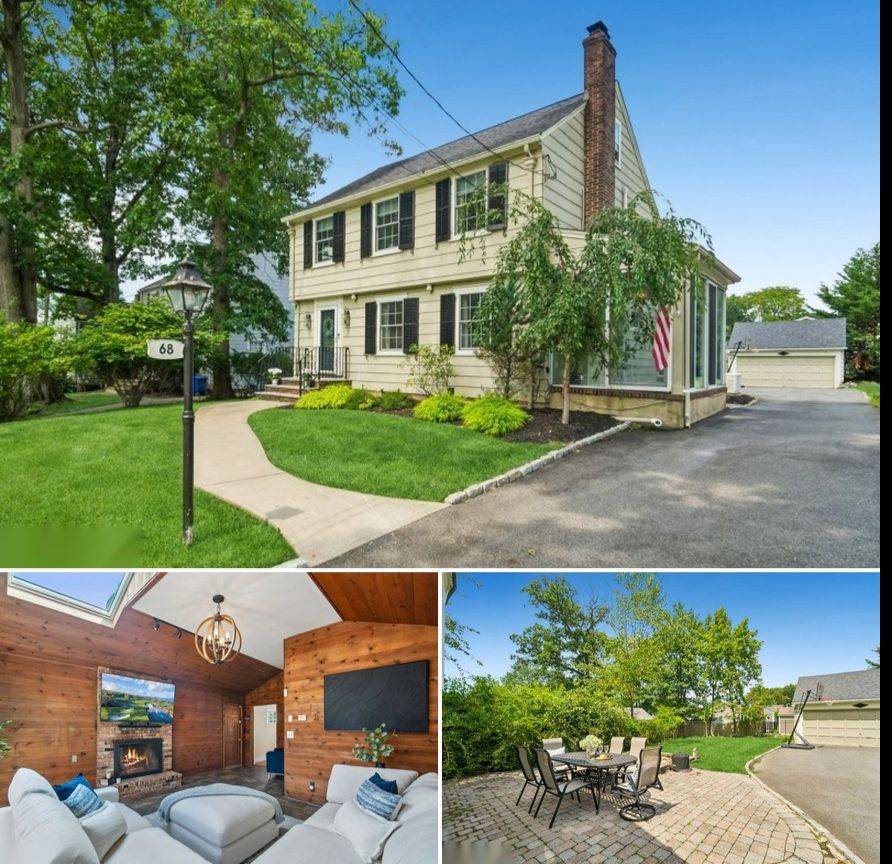
To put a face on that Essex band, here's a live one: 68 Linden Avenue in Verona — a three-bedroom 1933 center-hall Colonial listed at $825,000 (MLS# 4046106, listed by Caroline Mescia of Compass New Jersey; not my listing, featured here as a marker for the slice). The public listing shows a family-room addition with a wood-burning fireplace under a vaulted, skylit ceiling, a detached two-car garage, a walk-up attic, and a whole-house generator, with taxes around $15,200. As of this writing it has been on the market ten days.
It sits squarely in the band this issue is about — Essex single-family between $600,000 and $1,000,000 — which makes it a clean live test of the pattern. That slice has been closing at a median 111% of list in about two weeks; whether 68 Linden moves that fast depends on the block, the condition, and the price, not on the statewide headline. That is the whole point of this issue: the number that decides is the segment's, not the state's. If you want my honest read on where this one lands — or where your own house would — reply and I'll walk it.
The Bottom Line
The useful takeaway isn't 'the market is cooling' or 'the market is hot' — it's that the statewide headline can't tell you which one is true for you. Whatever you own and wherever it sits — an Essex mid-market home, a Bergen luxury property, an entry-level starter — the number that decides whether you sit is your segment's months of supply and your segment's sale-to-list, not New Jersey's. What punishes a seller in any segment this fall is the same thing: a list price set to last spring instead of the last sixty days, which is what July's 5,270 statewide price reductions actually were. If you're buying, the extra inventory is real selection statewide — but whether it's leverage depends entirely on which market you're shopping. Tell me your town and price band and I'll pull the number that's actually yours.
Frequently Asked Questions
Is New Jersey still a seller's market in 2026?
Yes, but a looser one than a year ago. Statewide months of supply was 2.6 in July 2026, up from 2.2 in July 2025 — anything under about four months is generally considered a seller's market, so 2.6 still qualifies, but the cushion thinned. Essex County was tighter at 1.8 months, up from 1.5 a year earlier.
Why did New Jersey's months of supply rise if prices aren't falling?
Two things moved at once. Unsold inventory was up about 15% year over year in July 2026 (more than 20,200 homes), while July contract sales ran about 5% behind July 2025 after June had run 7% ahead. More supply plus slightly softer demand raised months of supply from 2.2 to 2.6, even though the statewide median list price was essentially flat.
Which New Jersey price tiers are weakening in 2026?
Through mid-2026, two of the five statewide price tiers were down year to date. The largest decline, about 11%, was in the tier below $400,000, where affordability breaks first. The $1 million to $2.5 million tier was up about 12%, the strongest of the five.
Book a 15-minute call with Eric DeSilva or email hello@thedesilvateam.com.
FROM OUR BLOG
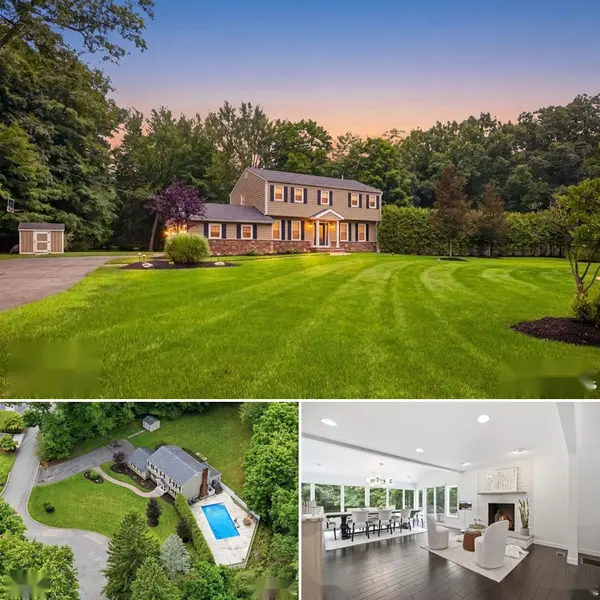

The Two-Speed Market: What the Rate Break Actually Does to Northern NJ
July 24, 2026 · Bergen · Essex · Morris The Two-Speed Market: What the Rate Break Actually Does to Northern NJ Rates just hit a 13-month high — but the real story is what the break does inside a two-month-supply market: nearly half of homes still sell in 14 days, over ask, while the other half qui
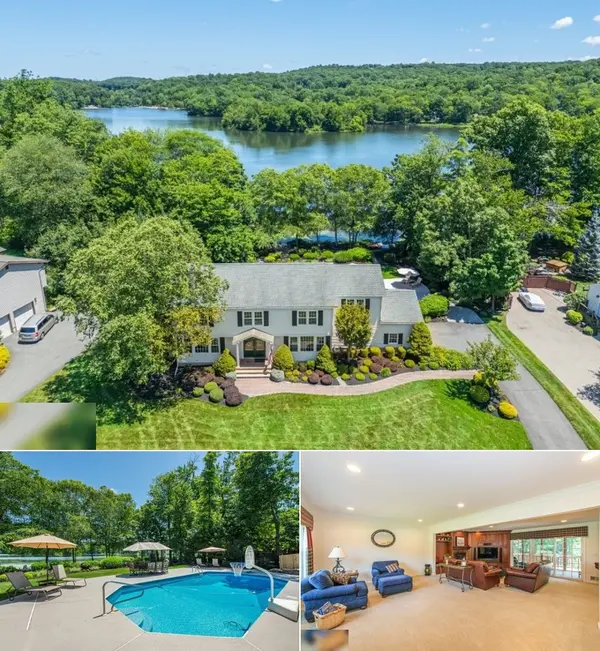
The Year Nothing Changed: Morris County's $1.2M–$1.5M Buyer Refuses the Headlines
Northern NJ Real Estate Weekly | Week of July 10, 2026 The Year Nothing Changed: Morris County's $1.2M–$1.5M Buyer Refuses the Headlines Rates went up again this week for reasons that have nothing to do with Morris County. The data says the county's move-up buyer didn't notice. Rate & Market Pulse
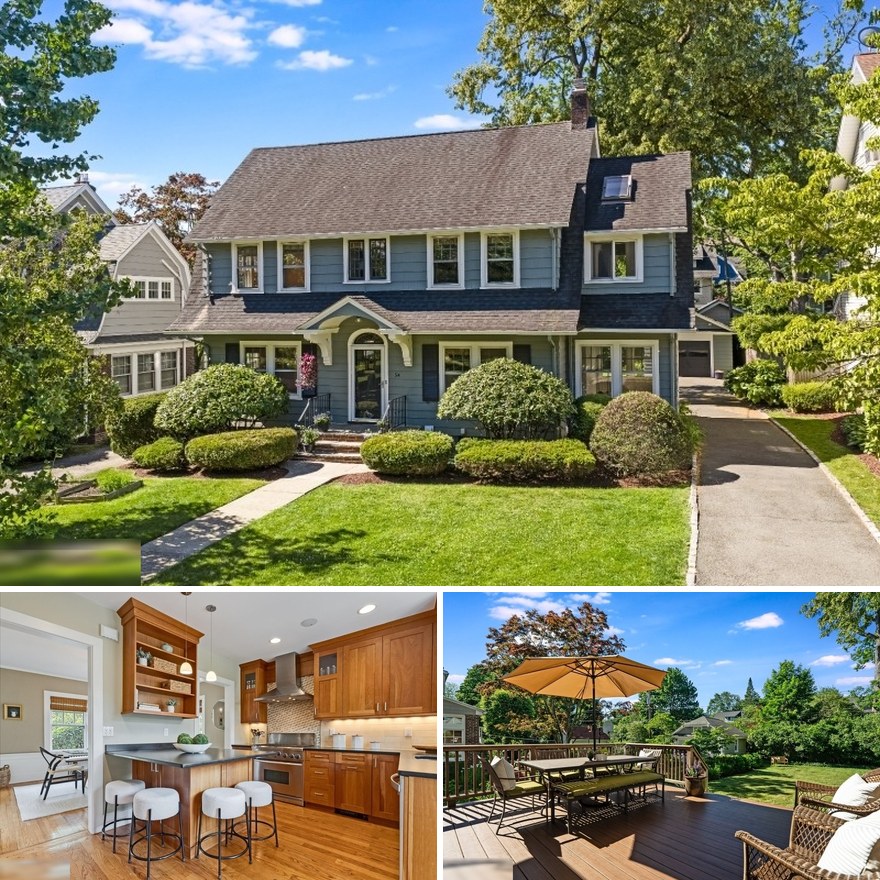
The Invisible Tier: Why Montclair Homes Sell $300K Over Their List Price
The Invisible Tier: Why Montclair Homes Sell $300K Over Their List Price Thirty-eight Montclair homes have closed between $1M and $1.5M this year — and most of them were never listed there. If your search filter starts at $1M, you're shopping a market you can't see. Rate & Market Pulse Freddie Mac's
About the Authors
Eric & Kathryn DeSilva are local North Jersey real estate advisors specializing in strategic pricing, digital marketing exposure, and data-driven negotiation. Based in Nutley, they serve Essex and Bergen County homeowners and buyers.
Thinking About Making a Move in 2026?
Whether you're buying or selling in Nutley or surrounding North Jersey towns, we help you move with strategy — not guesswork.

BUYER SERVICES
We're here to help you find the home of your dreams. With a team of experts guiding you every step of the way, our extensive knowledge and experience will ensure you have the best home buying experience possible.

SELLER SERVICES
We take the stress out of selling your home by providing a seamless experience from start to finish. Our team will put you in the best position to market your home and sell it for the highest possible price.